
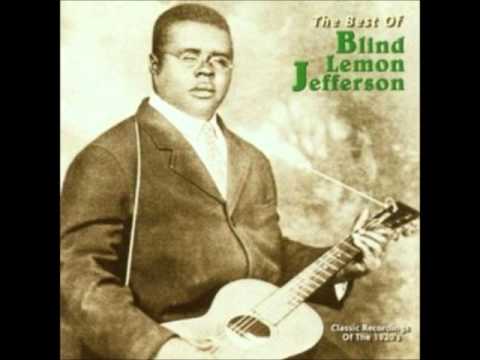
Blind Lemon Jefferson
Musical Influence
Jefferson's fingerprints are all over the next two generations of the blues. Lead Belly, who busked beside him in Dallas as a young man, carried Jefferson's repertoire and phrasing into his own songster tradition. T-Bone Walker, who led him by the hand as a boy, took the guitar lessons Jefferson gave him in payment and built the foundations of the electric blues guitar style on top of them. Lightnin' Hopkins, another Texan, grew up idolizing Jefferson's records and modeled his own loose, conversational guitar-and-voice interplay directly on them. And B.B. King repeatedly named Jefferson — alongside Lonnie Johnson and T-Bone Walker — as one of the guitarists whose records he studied obsessively as a young man in Mississippi (Kilde: Wikipedia). It's a straight line from a blind street singer in Deep Ellum to the entire postwar Texas and Chicago blues-guitar tradition.
Influences
Family and personal life
Formative experiences
- •1912: Began busking with Huddie Ledbetter (Lead Belly) in Deep Ellum, Dallas. (Kilde: Wikipedia)
- •c. 1917: Taught a teenage T-Bone Walker basic blues guitar in exchange for being led around Dallas. (Kilde: Wikipedia)
- •Late 1925/early 1926: Brought to Chicago and signed to Paramount Records. (Kilde: Wikipedia)
- •March 1927: Recorded "Black Snake Moan" and "Matchbox Blues" at Okeh Records, Atlanta, in a single session. (Kilde: Wikipedia)
- •December 19, 1929: Died in Chicago under disputed circumstances. (Kilde: Wikipedia)
Instruments & Equipment
Guitar
No specific make is reliably documented for Jefferson's own working guitar — historians note this remains unconfirmed.
Vocals
High, keening vocal delivery paired with intricate, irregular-metered guitar lines that often departed from strict song structure.
Stories & Anecdotes
"Paramount's Mayo Williams reportedly gave Jefferson a Ford automobile worth over $700 in recognition of his record sales — an extraordinary gift for a Black recording artist in the 1920s. (Kilde: Wikipedia)"
"His grave went unmarked for decades; a Texas historical marker was placed in 1967, but a proper headstone — inscribed with a line from "See That My Grave Is Kept Clean" — wasn't erected until 1997. (Kilde: Wikipedia; Texas Historical Commission)"
Collaborators
Busking partner in Deep Ellum, Dallas, from around 1912, years before either had a recording contract.
Led Jefferson around Dallas as a teenage guide from c. 1917 and received blues guitar lessons in return.
Watch & Listen
Blind Lemon Jefferson: See That My Grave Is Kept Clean
His most famous composition, recorded twice (1927 and 1928).
The Worst Program On The Internet ... The Blues

Watch & Listen
Press & quotes
"Jefferson's high-pitched voice and intricate, syncopated guitar accompaniment departed from the traditional 12-bar blues form, expanded to fit his lyrical narratives."
Discography
| Year | Title | Producer | Studio | Label | Chart | Sales | Musicians | YouTube | Notes |
|---|---|---|---|---|---|---|---|---|---|
| 1926 | First Paramount sessions, Marsh Laboratories, Chicago | Paramount Records (Mayo Williams) | — | Paramount Records | — | — | — | December 1925/January 1926 debut, credited as "Deacon L. J. Bates"; further sessions through the year at Marsh Laboratories in Chicago produced the breakout secular hit "Long Lonesome Blues." Solo — voice and guitar only, as on almost all his recordings. | |
| 1927 | Chicago sessions with pianist George Perkins | Paramount Records (Mayo Williams) | — | Paramount Records | — | — | George Perkins (Piano) | May–June 1927 sessions were among the very few of his career to feature a second musician rather than solo guitar. | |
| 1927 | Okeh Records session, Atlanta | Okeh Records | — | Okeh Records | — | — | — | One-off session away from Paramount, March 14–15, 1927; recorded "Black Snake Moan" and "Matchbox Blues" in a single sitting. Solo. | |
| 1927 | "See That My Grave Is Kept Clean" (original), Chicago | Paramount Records | — | Paramount Records | — | — | — | October 1927 original recording, credited as "Deacon L. J. Bates." Solo. | |
| 1928 | "See That My Grave Is Kept Clean" (re-recording), Chicago | Paramount Records | — | Paramount Records | — | — | — | Re-recorded in February 1928 after the October 1927 original sold well. Solo. | |
| 1929 | Gennett Studios session, Richmond, Indiana | Gennett Records | — | Gennett Records (Paramount lease) | — | — | — | September 24, 1929; recorded at the same Richmond, Indiana studio Charley Patton used the same year. Solo. | |
| 1929 | Final Chicago ensemble session | Paramount Records (Mayo Williams) | — | Paramount Records | — | — | Unidentified pianist (Piano), Unidentified banjoist (Banjo) | October 1929, his last recordings before his death that December; one of the only sessions of his career cut with a small backing ensemble rather than solo. |