King Biscuit Boy
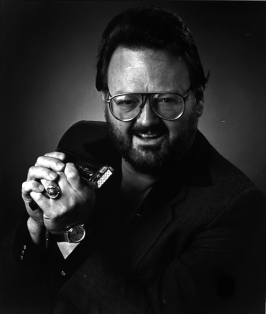
King Biscuit Boy, born Richard Alfred Newell in Hamilton, Ontario, was one of Canada's most celebrated and influential harmonica players, known for his raw Chicago-inspired style.
Musical Influence
King Biscuit Boy became the first Canadian blues artist ever to chart on the Billboard Hot 100, establishing a template for Canadian harmonica-driven blues that influenced generations of players in Hamilton's still-thriving blues scene. His work with Crowbar and his sessions with Allen Toussaint's Meters connected Canadian blues directly to New Orleans and Chicago traditions, and the annual "Blues with a Feeling" benefit concert established in his memory remains a fixture of Hamilton's music calendar (Kilde: Wikipedia).
Influences
Family and personal life
Formative experiences
- •Age 12: Buys his first harmonica. (Kilde: Wikipedia)
- •Summer 1969: Helps form Ronnie Hawkins's backing band "And Many Others"; receives his stage name from Hawkins. (Kilde: Wikipedia)
- •1970: Band members regroup as Crowbar after Hawkins fires them; releases "Official Music." (Kilde: Wikipedia)
- •1974: Self-titled album ("The Brown Derby Album") recorded in New Orleans with the Meters. (Kilde: Wikipedia)
- •September 1975: "New Orleans" becomes his highest-charting single, reaching #68 in Canada. (Kilde: Wikipedia)
Instruments & Equipment
Other
His primary instrument; preferred diatonic harmonicas and rarely played chromatic.
Stories & Anecdotes
"Got his stage name directly from Ronnie Hawkins, who named him after the radio show "King Biscuit Time." (Kilde: Wikipedia)"
"Became the first Canadian blues artist ever to chart on the Billboard Hot 100. (Kilde: Wikipedia)"
"Recorded his 1974 self-titled album in New Orleans backed by Allen Toussaint's studio band, the Meters. (Kilde: Wikipedia)"
"Critic Robert Christgau praised his "virtuoso harmonica" playing. (Kilde: Wikipedia)"
"Friends established the annual "Blues with a Feeling" benefit concert and a music scholarship at Mohawk College in his memory after his 2003 death. (Kilde: Wikipedia)"
Collaborators
Gave him his stage name and bandleader role in "And Many Others" (1969).
Band formed by Hawkins's ex-backing musicians; he played with them intermittently throughout his career.
Backed him on his 1974 self-titled album, recorded in New Orleans.
Fellow Crowbar veteran and lifelong friend; recorded "Two Hound Blues" together, released posthumously in 2003.
Watch & Listen
Bum is Mine - King Biscuit Boy 1974
From his 1974 self-titled album, recorded in New Orleans with the Meters.
chromboyx


Watch & Listen
Discography
| Year | Title | Producer | Studio | Label | Chart | Sales | Musicians | YouTube | Notes |
|---|---|---|---|---|---|---|---|---|---|
| 1970 | Official Music (with Crowbar) | — | — | Love Productions | — | — | Roly Greenway (Bass), Larry Atamanuik (Drums), Rheal Lanthier (Lead guitar), John Gibbard (Lead guitar, slide guitar), John Rutter (Percussion), Kelly Jay Fordham (Piano, percussion), Doug Riley (Organ, piano), Richard Bell (Piano), Gregg Mudry (Horn), Moe Koffman (Horn), Steve Kennedy (Horn) | Formed from Ronnie Hawkins's fired backing band. Full backing band credit: Crowbar, engineered by Terry Brown. | |
| 1971 | Gooduns | — | — | Daffodil Records | — | — | — | — | |
| 1974 | King Biscuit Boy ("The Brown Derby Album") | Allen Toussaint | — | Epic Records | — | — | The Meters (Backing band) | Recorded in New Orleans; backed by the Meters. Source of "New Orleans," his highest-charting single. | |
| 1981 | Biscuits 'n' Gravy | — | — | Daffodil Records | — | — | — | — | |
| 1982 | Mouth of Steel | — | — | Red Lightnin' | — | — | — | Reissued 1984. | |
| 1995 | Urban Blues Re: Newell | — | — | Blue Wave | — | — | — | — | |
| 2003 | Two Hound Blues (with Sonny Del-Rio) | — | — | Race Records | — | — | Sonny Del-Rio (Saxophone) | Released posthumously. |