
Led Zeppelin
The band Jimmy Page built from the wreckage of the Yardbirds in 1968, who rebuilt Willie Dixon, Robert Johnson, Memphis Minnie and Howlin' Wolf songs at stadium scale — and were sued, and settled, over nearly every one of them. The 2025 documentary Becoming Led Zeppelin, telling that early story in the band's own words, won the 2026 National Film Award for Best Documentary.
Musical Influence
Led Zeppelin's transformation of Delta and Chicago blues into stadium rock — Dixon, Wolf, Johnson and Memphis Minnie rebuilt at overwhelming volume and scale — created the commercial and sonic template for hard rock and heavy metal, while the string of copyright settlements it triggered permanently changed how the music industry credits blues source material (Kilde: Wikipedia).
Influences
Formative experiences
- •June 1968: Keith Relf and Jim McCarty leave the Yardbirds, leaving Jimmy Page with contracted tour dates and no band. (Kilde: Wikipedia)
- •October 1968: The New Yardbirds rename themselves Led Zeppelin. (Kilde: Wikipedia)
- •1969: "Led Zeppelin" and "Led Zeppelin II" released; "Whole Lotta Love" and "The Lemon Song" both draw on Willie Dixon and Howlin' Wolf material. (Kilde: Wikipedia)
- •December 1972: Arc Music sues over "The Lemon Song"; settled out of court with payment and credit to Howlin' Wolf. (Kilde: Wikipedia)
- •1971: "Led Zeppelin IV" released, including "When the Levee Breaks," rebuilding Memphis Minnie and Kansas Joe McCoy's 1929 original. (Kilde: Wikipedia)
- •1985: Willie Dixon's lawsuit over "Whole Lotta Love" settled out of court. (Kilde: Wikipedia)
- •24–25 September 1980: John Bonham dies; the band announces its end on 4 December 1980. (Kilde: Wikipedia)
Instruments & Equipment
Guitar
1959 Fender Telecaster ("the Dragon"), 1959 Gibson Les Paul "Number One," played through Marshall amplification and, on record, distance-miked for room ambience.
Other
"When the Levee Breaks" was recorded with microphones placed far down an open stairwell at Headley Grange, producing one of the most sampled drum sounds in recorded music.
Stories & Anecdotes
"An early UK pressing of "Led Zeppelin II" credited "The Lemon Song" directly to Chester Burnett — Howlin' Wolf's real name — before the album's official credits were changed following Arc Music's lawsuit. (Kilde: Wikipedia)"
"Howlin' Wolf was paid roughly $45,000 in the settlement over "The Lemon Song" and received a posthumous co-writing credit on later pressings. (Kilde: Wikipedia)"
""When the Levee Breaks" credits Memphis Minnie alongside the four band members, but not her writing and recording partner Kansas Joe McCoy, despite the 1929 original being credited to both of them. (Kilde: Wikipedia)"
""Traveling Riverside Blues," a direct Robert Johnson cover recorded for BBC radio in 1969, sat unreleased for 21 years before appearing on the band's 1990 box set — and still reached No. 7 on Billboard's rock tracks chart. (Kilde: Wikipedia)"
"The band's name reportedly originated from a joke by the Who's Keith Moon and John Entwistle that a Page/Beck supergroup would go over "like a lead balloon." (Kilde: Wikipedia)"
"In February 2025, "Becoming Led Zeppelin" was released as the band's first officially sanctioned documentary, directed by Bernard MacMahon, featuring never-before-seen footage and commentary from Robert Plant, Jimmy Page and John Paul Jones. (Source: Variety; Wikipedia)"
Collaborators
Guitarist, producer, and architect of the band, formed from the wreckage of the Yardbirds.
Lead vocalist, recruited from obscurity in Birmingham.
Bassist, keyboardist and arranger; a former session musician like Page.
Drummer; his death in 1980 ended the band.
Sued over "Whole Lotta Love" and "Bring It On Home"; credited on both after settlement.
Credited and compensated after Arc Music's lawsuit over "The Lemon Song."
Credited on "When the Levee Breaks," adapted from her 1929 original.
Watch & Listen
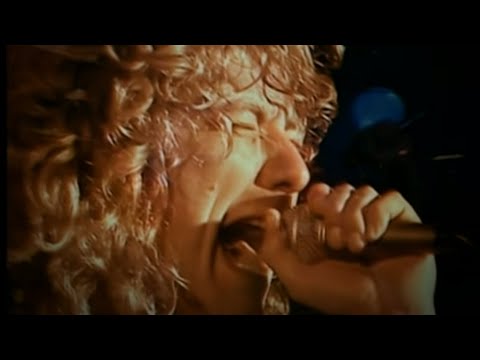
Led Zeppelin — Kashmir (Live at Knebworth 1979) [Official Video]
Full concert-quality official footage.
Led Zeppelin
![Led Zeppelin - Stairway To Heaven (Live at Earl's Court 1975) [Official Video]](https://i.ytimg.com/vi/Ly6ZhQVnVow/hqdefault.jpg)

Watch & Listen
Discography
| Year | Title | Producer | Studio | Label | Chart | Sales | Musicians | YouTube | Notes |
|---|---|---|---|---|---|---|---|---|---|
| 1969 | Led Zeppelin | Jimmy Page | — | Atlantic | — | — | Robert Plant (Vocals), John Paul Jones (Bass, keyboards), John Bonham (Drums) | Debut album; includes Willie Dixon's "You Shook Me" and "I Can't Quit You Baby," both credited to Dixon from release. | |
| 1969 | Led Zeppelin II | Jimmy Page | — | Atlantic | — | — | — | No. 1 UK and US. Includes "Whole Lotta Love" (Willie Dixon lawsuit, settled 1985), "The Lemon Song" (Arc Music/Howlin' Wolf lawsuit, settled 1972–73), and "Bring It On Home" (Dixon credit added 1972). | |
| 1970 | Led Zeppelin III | Jimmy Page | — | Atlantic | — | — | — | No. 1 UK and US; more acoustic, folk-influenced direction. | |
| 1971 | Led Zeppelin IV (untitled) | Jimmy Page | — | Atlantic | — | — | — | Estimated 37 million copies sold. Includes "When the Levee Breaks," rebuilding Memphis Minnie and Kansas Joe McCoy's 1929 original, credited to Memphis Minnie. | |
| 1973 | Houses of the Holy | Jimmy Page | — | Atlantic | — | — | — | Topped charts worldwide. | |
| 1975 | Physical Graffiti | Jimmy Page | — | Swan Song | — | — | — | Double album, includes "Kashmir." | |
| 1976 | Presence | Jimmy Page | — | Swan Song | — | — | — | Platinum seller, more mixed critical reception. | |
| 1979 | In Through the Out Door | Jimmy Page | — | Swan Song | — | — | — | No. 1 UK and US; final studio album before Bonham's death. | |
| 1990 | Led Zeppelin (box set) — "Traveling Riverside Blues" | — | — | Atlantic | — | — | — | Direct Robert Johnson cover, recorded for BBC radio in 1969 and unreleased until this box set; reached No. 7 on Billboard's Album Rock Tracks chart. |
Famous songs
External links
Booking / Contact
Are you the artist, or do you represent the band or booking agency? We want the booking information here to always be accurate and current. Please send us the correct details via our contact form, and we'll update the profile as soon as possible. Go to the contact form