

Muddy Waters
Musical Influence
The Rolling Stones took their name directly from his song and cited him as the reason they picked up instruments in the first place. Eric Clapton served as best man at his final wedding. Alexis Korner and Cyril Davies, who saw his electrified 1958 UK tour firsthand, went on to seed the entire British blues boom that produced Cream and Fleetwood Mac. Jimi Hendrix, the Grateful Dead and countless American rock bands built directly on the sound of his Chess-era band. Four of his songs — "Rollin' Stone," "Hoochie Coochie Man," "Mannish Boy" and "Got My Mojo Working" — are included on the Rock and Roll Hall of Fame's list of 500 Songs That Shaped Rock and Roll (Kilde: Wikipedia).
Influences
Family and personal life
Raised him after his mother's death; gave him the nickname "Muddy" for playing in the mud along Deer Creek.
Among at least six children; several became blues musicians themselves.
Formative experiences
- •1941–1942: Recorded by Alan Lomax for the Library of Congress at Stovall Plantation. (Kilde: Wikipedia)
- •1943: Moved to Chicago — "the single most momentous event" of his life, in his own words. (Kilde: Wikipedia)
- •1948: "I Can't Be Satisfied" became his breakthrough hit on the newly renamed Chess Records. (Kilde: Wikipedia)
- •1954–1955: Recorded the Willie Dixon-written songs that would define his identity — "Hoochie Coochie Man," "I'm Ready," "Mannish Boy." (Kilde: Wikipedia)
- •1958: Electric UK tour scandalized folk-purist audiences and directly seeded the British blues boom. (Kilde: Wikipedia)
Instruments & Equipment
Guitar
His first guitar, bought with money from selling the family horse.
Rebuilt Delta slide technique for the electric guitar, becoming the foundational sound of postwar Chicago blues.
Stories & Anecdotes
"Hearing his own voice played back by Alan Lomax in 1941 was, by his own account, the moment he decided to pursue music as a career. (Kilde: Wikipedia)"
"His 1958 UK tour drew a newspaper headline reading "Screaming Guitar and Howling Piano" — considered scandalous at the time, it's now viewed as the spark for the entire British blues boom. (Kilde: Wikipedia)"
"He publicly disowned his own 1968 psychedelic-soul album "Electric Mud" despite its eventual cult status. (Kilde: Wikipedia)"
"In 2016, the International Astronomical Union named a crater on the planet Mercury after him. (Kilde: Wikipedia)"
Collaborators
Harmonica player in his classic 1950s Chess band.
Bassist and songwriter who wrote "Hoochie Coochie Man," "I'm Ready" and other songs central to Waters's identity.
Pianist in his classic band for over two decades.
Guitarist in his classic 1950s Chess band.
Guitarist who produced his celebrated late-career Blue Sky Records comeback albums, 1977–1981.
Watch & Listen
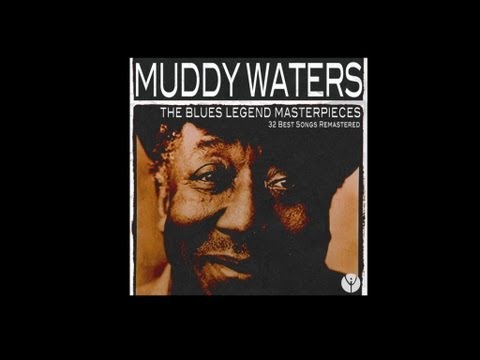
Muddy Waters - Hoochie Coochie Man [1954]
Written by Willie Dixon, recorded January 7, 1954 — the record that defined his classic Chess sound.
Classic Mood Experience

Watch & Listen
Discography
| Year | Title | Producer | Studio | Label | Chart | Sales | Musicians | YouTube | Notes |
|---|---|---|---|---|---|---|---|---|---|
| 1946 | Aristocrat Records era, Chicago | Leonard & Phil Chess | — | Aristocrat | — | — | Ernest "Big" Crawford (Bass), "Baby Face" Leroy Foster (Drums, guitar), Johnny Jones (Piano) | Early sessions; label soon renamed Chess Records. | |
| 1948 | "I Can't Be Satisfied" / "I Feel Like Going Home" | Leonard Chess | — | Chess | — | — | Ernest "Big" Crawford (Bass) | His breakthrough hit, Chess Records' first genuine blues star. A stripped-down duo of guitar and bass — Chess initially doubted the raw sound would sell. | |
| 1950 | "Rollin' Stone" | Leonard Chess | — | Chess | — | — | — | Reworking of "Catfish Blues"; later lent its name to both a rock band and a magazine. | |
| 1954 | Classic Chess band sessions | Leonard Chess | — | Chess | — | — | Little Walter Jacobs (Harmonica), Otis Spann (Piano), Willie Dixon (Bass) | "Hoochie Coochie Man" (Jan 7), "I Just Want to Make Love to You," "I'm Ready" — all written by Willie Dixon. | |
| 1955 | "Mannish Boy" | Leonard Chess | — | Chess | — | — | — | Recorded May 24, 1955 — answer song to Bo Diddley's "I'm a Man." | |
| 1960 | Muddy Waters Sings "Big Bill" | Chess | — | Chess | — | — | — | Tribute to Big Bill Broonzy. | |
| 1964 | Folk Singer | Chess | — | Chess | — | — | Buddy Guy (Guitar) | Deliberately acoustic album, featuring a young Buddy Guy on guitar. | |
| 1968 | Electric Mud | Marshall Chess | — | Cadet Concept | — | — | — | Psychedelic-soul-leaning album that Waters later publicly disowned. | |
| 1969 | Fathers and Sons | Chess | — | Chess | — | — | Michael Bloomfield (Guitar), Paul Butterfield (Harmonica) | Celebrated collaboration with Michael Bloomfield and Paul Butterfield. | |
| 1972 | The London Muddy Waters Sessions | Chess | — | Chess | — | — | Carey Bell (Harmonica), Sammy Lawhorn (Guitar), Rory Gallagher (Guitar), Steve Winwood (Keyboards), Rick Grech (Bass), Mitch Mitchell (Drums) | Recorded with British rock musicians in London. | |
| 1975 | The Muddy Waters Woodstock Album | Chess | — | Chess | — | — | Bob Margolin (Guitar), Pinetop Perkins (Piano), Paul Butterfield (Harmonica), Levon Helm (Drums), Garth Hudson (Organ, accordion, saxophone) | Recorded near Woodstock, New York. Levon Helm and Garth Hudson of The Band appeared as sidemen. | |
| 1977 | Hard Again | Johnny Winter | — | Blue Sky | — | — | Johnny Winter (Guitar/Production) | Acclaimed late-career comeback album. | |
| 1978 | I'm Ready | Johnny Winter | — | Blue Sky | — | — | — | Second Blue Sky/Johnny Winter-produced comeback album. | |
| 1979 | Muddy "Mississippi" Waters — Live | Johnny Winter | — | Blue Sky | — | — | — | Live album from the Blue Sky comeback era. | |
| 1981 | King Bee | Johnny Winter | — | Blue Sky | — | — | — | Final studio album. |