Slow-Blues.com — Global Blues Encyclopedia
Back to artists
Rory Gallagher
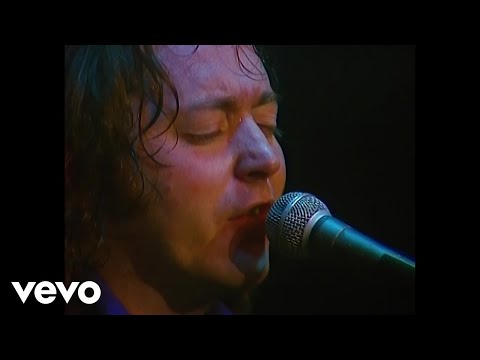
Photo: Circacies (Wikimedia Commons, CC BY-SA 4.0)
Blues Rock

Rory Gallagher

This artist is no longer with us.
Born: March 2, 1948, Ballyshannon, County Donegal, Ireland · Died: June 14, 1995, London, England (staphylococcal infection following a liver transplant)• Ireland• Active: 1963–1995
Blues RockClassic Blues

Passed away on June 14, 1995, aged 47. The Stratocaster and Irish Tour '74 live on.

Instruments
Electric guitar, Vocals
Labels
Polydor, Chrysalis, Capo
from
Cork, Ireland
Born
March 2, 1948, Ballyshannon, County Donegal, Ireland
Rory Gallagher never had a signature hit single, never courted a major label for long, and still managed to sell over 30 million records and inspire half of rock's guitar heroes — because for twenty-five years he simply refused to stop touring, playing clubs and halls with the same intensity whether there were fifty people in the room or fifty thousand. He was born William Rory Gallagher on March 2, 1948, at the Rock Hospital in Ballyshannon, County Donegal, Ireland, to Daniel "Danny" Gallagher, an accordion player and former Irish Army soldier, and Monica Gallagher (née Roche) from County Cork. His younger brother Dónal, born the following year, would become his manager for most of his career. The family moved through Derry before settling in Cork, where Rory grew up (Kilde: Wikipedia). He left school at fifteen and joined the Fontana Showband, then its more Chuck Berry-leaning successor The Impact, touring Ireland's ballroom circuit because, as he put it, there was "nowhere else to go with an electric guitar." In 1963, on credit from Michael Crowley's music shop in Cork, he bought a well-worn 1961 Fender Stratocaster for £100 — reportedly one of the first Stratocasters in Ireland — and played almost nothing else for the rest of his life. Its stripped, sun-faded finish became as recognizable as his sound (Kilde: Wikipedia, rorygallagher.com, RTÉ). Frustrated with showband life, he formed the power trio Taste in Cork in 1966, named after a Beamish stout beermat. The band relocated to Belfast, rebuilt its lineup around bassist Richard McCracken and drummer John Wilson, and became one of the era's great live acts — on July 21, 1970, they broke the Marquee Club's all-time box-office record, a mark previously held by Jimi Hendrix. Taste split that October, worn down by management disputes, after two studio albums (Taste, 1969; On the Boards, 1970, both Polydor) (Kilde: Wikipedia). Gallagher went solo immediately, debuting at the Paris Olympia on March 30, 1971, with bassist Gerry McAvoy — who would stay with him for the next twenty years — and drummer Wilgar Campbell. His self-titled debut and Deuce followed within the year, both on Polydor, both self-produced. Live! in Europe (1972) became his commercial breakthrough, cracking the UK Top 10 and earning his first gold disc. Two further studio records, Blueprint and Tattoo (both 1973), preceded what many still consider his masterpiece: Irish Tour '74, a double live album recorded across Cork, Dublin and Belfast using Ronnie Lane's mobile studio, at a time when few international acts would tour Northern Ireland during the Troubles at all. It went gold and sold over two million copies worldwide (Kilde: Wikipedia). A move to Chrysalis Records brought Against the Grain (1975) and Calling Card (1976, produced by Deep Purple's Roger Glover), followed by Photo-Finish (1978) and Top Priority (1979). In January 1975, Rolling Stones pianist Ian Stewart invited him to Rotterdam to audition as Mick Taylor's replacement; Gallagher jammed with the band for three days but wasn't chosen — bassist Bill Wyman later said Jagger and Richards felt he "wasn't the kind of character that would fit," being too strong a presence to sit alongside two large egos. That same year, Melody Maker's readers had already voted him Guitarist of the Year, ahead of both Clapton and Hendrix in earlier polls — the trophy's five-sunbeam design was later carved onto his headstone (Kilde: Wikipedia). Through the 1980s his output slowed as his health quietly deteriorated — a longtime fear of flying led to increasing reliance on prescription medication, compounded by the physical toll of decades of near-constant touring. Jinx (1982) sold poorly; Defender (1987), self-released on his own Capo label, topped the UK independent chart and won Best Album at Ireland's Rock Awards; Fresh Evidence (1990), recorded on vintage equipment with old Taste-era collaborator Lou Martin back on keyboards, was his last studio album. He kept touring into 1995 with a reshuffled band, but a January tour of the Netherlands had to be cut short. He received a liver transplant that March at King's College Hospital, London, and seemed to be recovering — then contracted a staphylococcal infection that killed him on June 14, 1995, at 47 (Kilde: Wikipedia). He played more than 2,000 concerts in a 25-year career and never really stopped being a musician's musician: Eric Clapton has said it was Gallagher who got him "back into the blues"; Brian May has credited him as the root of his own tone and gear choices; Johnny Marr learned Deuce track-for-track at thirteen. Slash, The Edge, Glenn Tipton and Joe Bonamassa have all named him a formative influence. Ballyshannon and Belfast both have statues of him; Dublin, Cork and Paris have named public spaces after him; and every year since 2002, Ballyshannon has hosted the Rory Gallagher International Tribute Festival (Kilde: Wikipedia, AllMusic).

Musical Influence

Gallagher's real legacy is negative space: he never had the one crossover single that would have made him a household name outside blues and rock circles, and never wanted one. What he left instead was a working model of pure, relentless live craft — an artist who toured constantly, played completely straight (no theatrics, no persona, just the Stratocaster and the band), and became one of the most cited influences in rock guitar precisely because he never compromised the sound to chase a bigger audience. Clapton, Brian May, Slash, The Edge and Joe Bonamassa all point to him as formative, and his refusal of the Rolling Stones' offer in 1975 has become its own kind of legend — proof that the music mattered more than the machine around it (Kilde: Wikipedia, AllMusic).

Influences

Muddy WatersLeadbellyWoody GuthrieBuddy Holly

Family and personal life

Father

Accordion player and former Irish Army soldier.

Mother

From County Cork.

Brother

Became his manager for most of his career.

Formative experiences

  • •1963: Buys the 1961 Stratocaster on credit, Cork. (Kilde: Wikipedia)
  • •1966: Forms Taste. (Kilde: Wikipedia)
  • •21 Jul 1970: Taste breaks the Marquee Club's box-office record, previously held by Jimi Hendrix. (Kilde: Wikipedia)
  • •30 Mar 1971: Solo debut at the Paris Olympia. (Kilde: Wikipedia)
  • •Jan 1975: Auditions for the Rolling Stones in Rotterdam. (Kilde: Wikipedia)
  • •Mar 1995: Liver transplant, King's College Hospital, London. (Kilde: Wikipedia)

Instruments & Equipment

Stories & Anecdotes

"Auditioned for the Rolling Stones in Rotterdam, January 1975, but Jagger and Richards reportedly felt he was too strong a presence to sit beside two big egos. (Kilde: Wikipedia)"
"Taste broke Jimi Hendrix's box-office record at London's Marquee Club in 1970. (Kilde: Wikipedia)"
"Eric Clapton has said it was Gallagher who got him "back into the blues." (Kilde: AllMusic)"
"His 1972 Melody Maker "Guitarist of the Year" trophy design — five gold sunbeams — was later carved onto his headstone. (Kilde: Wikipedia)"

Collaborators

Bassist for roughly twenty years, from the 1971 solo debut onward.

Deep Purple bassist; produced Calling Card (1976).

Keyboardist from the Taste era through Fresh Evidence (1990).

Watch & Listen

Featured

Bad Penny

Rory Gallagher - Topic

Watch & Listen

Henter videoer fra YouTube…

Discography

YearTitleProducerStudioLabelChartSalesMusiciansYouTubeNotes
1969Taste (with Taste)——Polydor———Debut studio album, recorded in a single day.
1970On the Boards (with Taste)——Polydor———All ten tracks written by Gallagher; UK #18.
1971Rory Gallagher——Polydor———Solo debut, self-produced.
1971Deuce——Polydor————
1972Live! in Europe——Polydor———Commercial breakthrough; first gold disc.
1973Blueprint——Polydor————
1973Tattoo——Polydor————
1974Irish Tour '74——Polydor———Double live album; gold, 2M+ copies sold.
1975Against the Grain——Chrysalis———First Chrysalis release.
1976Calling Card——Chrysalis———Produced by Roger Glover (Deep Purple).
1978Photo-Finish——Chrysalis————
1979Top Priority——Chrysalis————
1980Stage Struck——Chrysalis———Live album.
1982Jinx——Chrysalis/Mercury———Self-produced.
1987Defender——Capo/Demon———Topped the UK Independent Albums Chart.
1990Fresh Evidence——Capo/Castle———Final studio album.

Famous songs

01Tattoo'd Lady
02A Million Miles Away
03Cradle Rock
04Bad Penny
05Shadow Play

Awards & Recognition

1972
Guitarist of the Year
Melody Maker readers' poll
1987
Best Album
Ireland Rock/Hot Press Awards
1992
Fender/Arbiter Hall of Fame Award
—

External links

Sources

Keep SlowBlues independent. Official merch — wear the blues.

Shop merch