Slow-Blues.com — Global Blues Encyclopedia
Back to artists
Son House
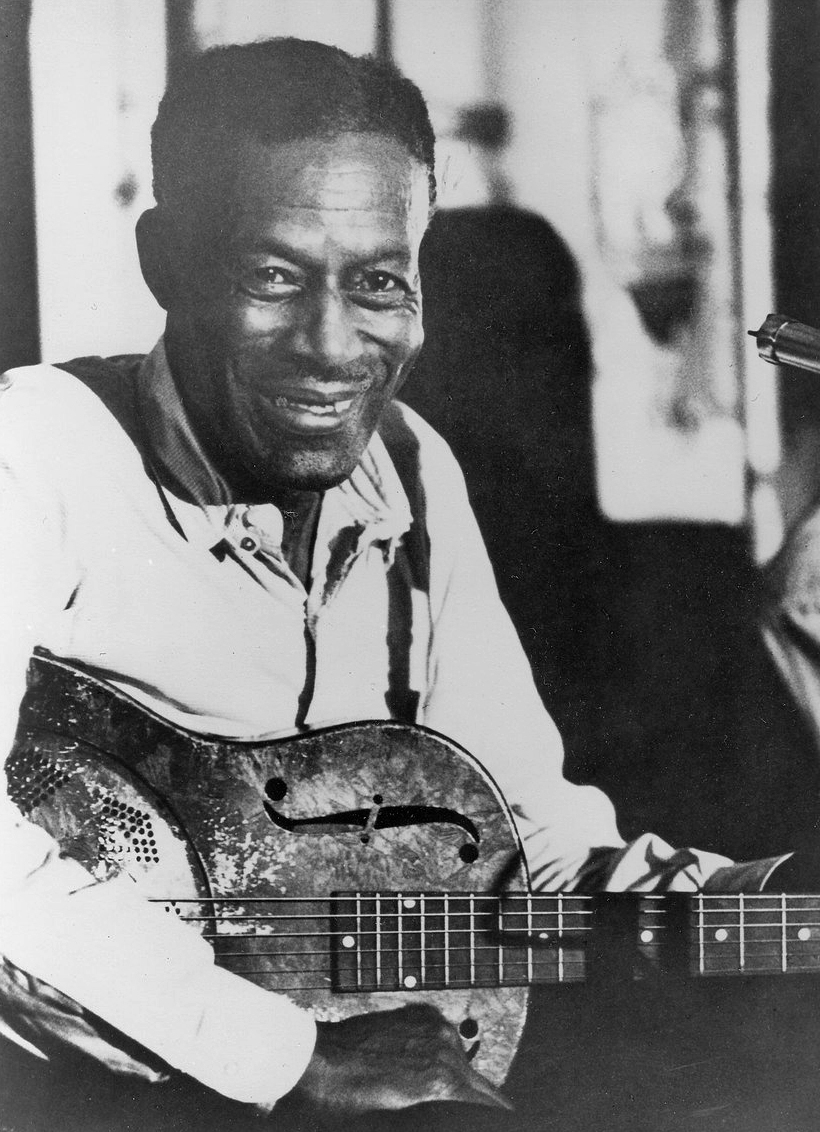
Minneapolis, May 1971 — photographer credited only as "JT" in the original source (Wikimedia Commons, public domain)
Delta

Son House

This artist is no longer with us.
Born: March 21, 1902, Lyon, Mississippi (House himself sometimes claimed an earlier birth year, c. 1886, but legal records confirm 1902) · Died: October 19, 1988, Detroit, Michigan (laryngeal cancer)• United States
Delta BluesCountry Blues
Instruments
National steel guitar (slide), Voice
Labels
Paramount, Library of Congress, Columbia
from
Mississippi Delta
Born
March 21, 1902, Lyon, Mississippi (House himself sometimes claimed an earlier birth year, c. 1886, but legal records confirm 1902)
Eddie James "Son" House Jr. spent his whole life fighting the blues — literally believing it was the devil's music — and that fight is exactly what makes his records some of the most harrowing things ever put on wax. He was born on March 21, 1902, in Lyon, Mississippi (House himself sometimes claimed to be older, suggesting a birth closer to 1886, but legal records confirm 1902), to Eddie House Sr., a tuba-playing Baptist deacon, and grew up mostly in the rural Delta after his parents separated (Kilde: Wikipedia). He started preaching sermons himself at fifteen, in New Orleans, and by his own account was thoroughly "churchified" — actively hostile to blues music on religious grounds. At nineteen he married an older woman, Carrie Martin, against his family's wishes; the marriage collapsed after years of farm labor in Louisiana (Kilde: Wikipedia). Everything changed at 25, in 1927, when he heard a bottleneck slide guitarist — accounts point to either James McCoy or Willie Wilson — and experienced what he later described as something close to a religious conversion, just pointed in the opposite direction. He bought a guitar and learned fast, picking up technique from McCoy, Wilson and Rube Lacey within weeks (Kilde: Wikipedia). Not long after, House shot and reportedly killed a man during an altercation at a juke joint — the exact circumstances remain murky, since House himself gave conflicting accounts over the years and biographer Daniel Beaumont found no surviving court records to confirm the details. He served roughly two years at Mississippi's Parchman Farm penitentiary before his release around 1929 (Kilde: Wikipedia). He met Charley Patton in Lula, Mississippi around 1929–1930, and travelled with Patton to a Paramount session in Grafton, Wisconsin in August 1930, where House cut nine songs of his own — "My Black Mama," "Preachin' the Blues" and "Dry Spell Blues" among them — of which eight were released into a record market collapsing under the weight of the Great Depression. They sold almost nothing (Kilde: Wikipedia). Alan Lomax found and recorded him twice for the Library of Congress — in August 1941 at a store in Lake Cormorant, Mississippi, with Willie Brown on guitar, and again in July 1942 in Robinsonville. During these Delta years, House was a direct, hands-on influence on two teenagers who would go on to define the next chapter of the blues: Robert Johnson and Muddy Waters both came up watching and learning from House and Willie Brown around Coahoma County (Kilde: Wikipedia). By 1943 House had left Mississippi behind entirely, moving to Rochester, New York, and taking a job as a railroad porter. For more than two decades he stopped playing music altogether and had no idea a global blues revival was even happening. In 1964, blues researchers Nick Perls, Dick Waterman and Phil Spiro tracked him down, still working a Rochester train station, and talked him back into playing. He appeared at the Newport Folk Festival that same year to an audience that treated him like a resurrected legend (Kilde: Wikipedia). Producer John Hammond recorded House for Columbia in 1965 — the sessions that became Father of Folk Blues — and, in one of the odder footnotes of blues history, brought in a 22-year-old blues scholar named Alan Wilson (later of Canned Heat) specifically to help remind House how to play his own older repertoire (Kilde: Wikipedia). House toured folk festivals and coffeehouses through the early 1970s, including a 1967 European tour alongside Skip James and Bukka White, before declining health forced his retirement in 1974. He settled in Detroit, where he died of laryngeal cancer on October 19, 1988, and was buried at Mt. Hazel Cemetery (Kilde: Wikipedia).

Musical Influence

House's raw, percussive slide style and unrelenting vocal intensity shaped two of the most important figures in blues history directly: a teenage Robert Johnson watched him play around Coahoma County, and Muddy Waters has repeatedly named House and Willie Brown as his most direct formative influence before he ever left Mississippi. When House himself was rediscovered in 1964, an entire generation of white folk and blues revivalists — and later rock musicians via the White Stripes' cover of "Death Letter" — treated his surviving records as close to scripture (Kilde: Wikipedia).

Influences

James McCoyWillie WilsonRube Lacey

Family and personal life

Father

Tuba-playing Baptist deacon.

Wife (1st of several)

Married at 19 against his family's wishes; the marriage later collapsed.

Daughters

House married five times in total across his life.

Formative experiences

  • •1927 (age 25): Heard a bottleneck slide guitarist and experienced what he called a musical "conversion." (Kilde: Wikipedia)
  • •1928–1929: Served roughly two years at Parchman Farm penitentiary after a fatal shooting at a juke joint. (Kilde: Wikipedia)
  • •August 1930: First Paramount recording session, Grafton, Wisconsin, travelling with Charley Patton. (Kilde: Wikipedia)
  • •1941–1942: Recorded twice by Alan Lomax for the Library of Congress in Mississippi. (Kilde: Wikipedia)
  • •1964: Rediscovered in Rochester, New York, by blues researchers after 21 years away from music; performed at Newport Folk Festival. (Kilde: Wikipedia)

Stories & Anecdotes

"Started out as a Baptist preacher actively hostile to the blues on religious grounds — the tension between the pulpit and the juke joint runs through his entire recorded output. (Kilde: Wikipedia)"
"Producer John Hammond brought 22-year-old blues scholar Alan Wilson (later of Canned Heat) into the 1965 Columbia sessions specifically to help House relearn his own decades-old material. (Kilde: Wikipedia)"
"Was completely unaware a global blues revival was happening until researchers physically found him working at a Rochester, New York train station in 1964. (Kilde: Wikipedia)"

Collaborators

Met around 1929–1930 in Lula, Mississippi; travelled together to House's first Paramount session in 1930.

Guitarist and close musical partner across the 1930s–40s, including the 1941 Library of Congress session.

Watched and learned from House around Coahoma County, Mississippi as a teenager.

Cited House and Willie Brown as his most direct formative influence before leaving Mississippi.

Watch & Listen

Featured

Son House "Death Letter Blues"

His best-known song from the 1965 rediscovery-era Columbia sessions.

GtrWorkShp

Watch & Listen

Henter videoer fra YouTube…

Discography

YearTitleProducerStudioLabelChartSalesMusiciansYouTubeNotes
1930First Paramount session, Grafton, WisconsinParamount Records—Paramount Records———August 1930 — nine songs recorded, eight released, including "Preachin' the Blues" and "My Black Mama." Commercial failure amid the Great Depression.
1941Library of Congress session, Clack Store, Lake Cormorant, MississippiAlan Lomax—Library of Congress——Willie Brown (Guitar), Fiddlin' Joe Martin (Mandolin), Leroy Williams (Harmonica)August 1941 — first Lomax field session, recorded at a country store with electricity to power the equipment; songs included "Levee Camp Blues," "Government Fleet Blues," "Walking Blues" and "Shetland Pony Blues," with railway noise audible on some takes. Recorded alongside his regular playing partner Willie Brown.
1942Library of Congress session, Robinsonville, MississippiAlan Lomax—Library of Congress———Second Lomax field session, July 17, 1942, yielding "Special Rider Blues" and "Depot Blues."
1965Father of Folk BluesJohn Hammond—Columbia Records———Rediscovery-era sessions; engineered with help from 22-year-old blues scholar Alan Wilson (later of Canned Heat).

Famous songs

01Death Letter
02Preachin' the Blues
03Grinnin' in Your Face
04My Black Mama
05Walking Blues

External links

Sources

Keep SlowBlues independent. Official merch — wear the blues.

Shop merch