Ten Years After
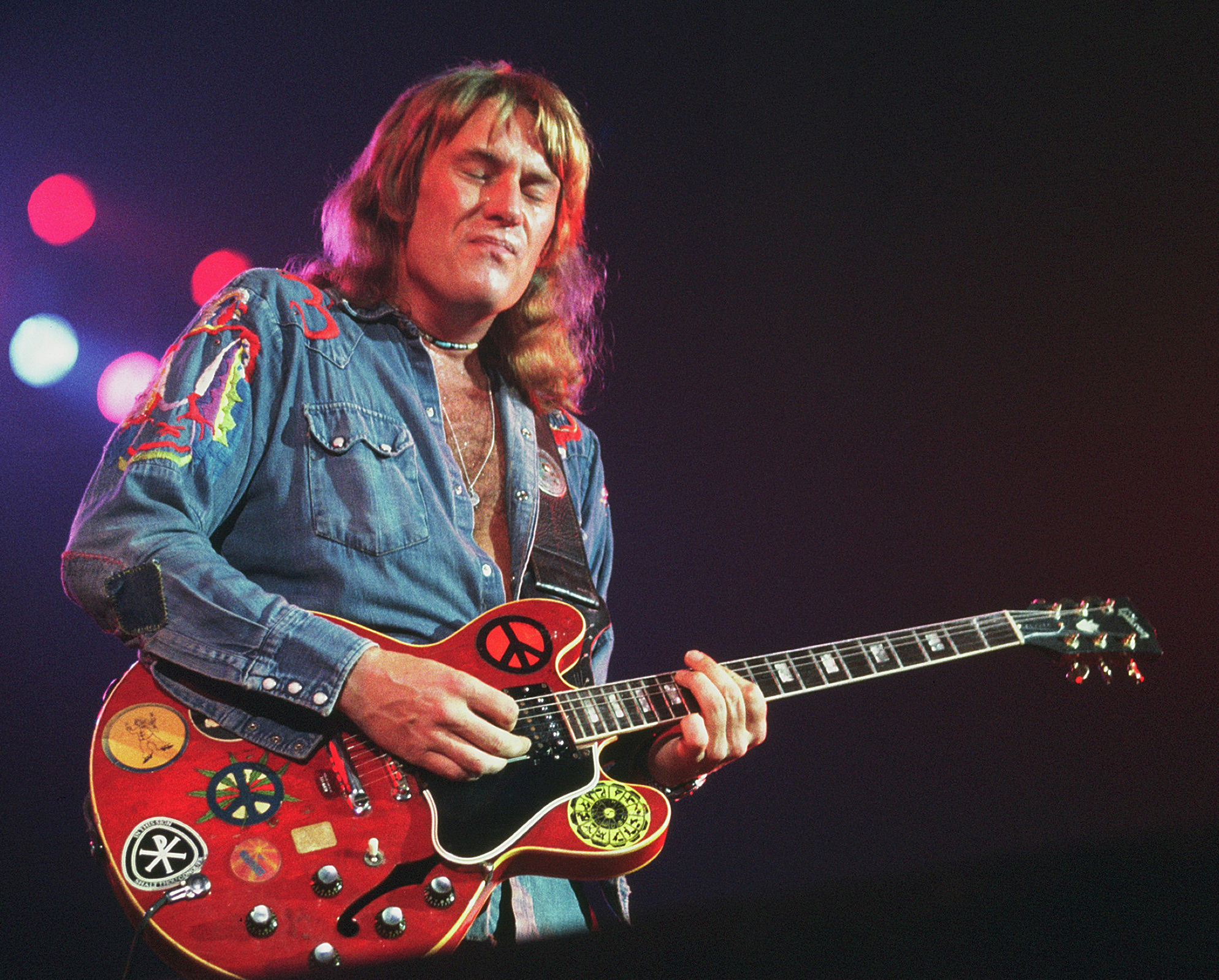
The Nottingham blues-rock band whose leader, Alvin Lee, became famous almost overnight for one blistering nine-minute performance of "I'm Going Home" at Woodstock in 1969, playing his battered ES-335 "Big Red" at a speed that earned him the nickname "the fastest guitarist in the West."
Musical Influence
One nine-minute Woodstock performance made Ten Years After's Alvin Lee a template for guitar-hero speed-playing, a direct ancestor of 1980s shred technique, even as the band's actual catalogue ran considerably deeper and bluesier than that single moment suggested (Kilde: Wikipedia).
Influences
Formative experiences
- •1966: Settles into its classic lineup and takes the name Ten Years After. (Kilde: Wikipedia)
- •1967: Self-titled debut album released on Deram. (Kilde: Wikipedia)
- •17 August 1969: Performs "I'm Going Home" at Woodstock, captured for the festival film. (Kilde: Wikipedia)
- •1970: "Cricklewood Green" becomes the band's biggest UK success. (Kilde: Wikipedia)
- •1975: Band splits after Alvin Lee pursues a solo career. (Kilde: Wikipedia)
- •6 March 2013: Alvin Lee dies in Estepona, Spain, aged 68. (Kilde: Wikipedia)
Instruments & Equipment
Guitar
Alvin Lee's main guitar, its f-holes taped over to cut feedback and covered in stickers over the years; used at Woodstock and on most of the band's studio material.
Stories & Anecdotes
"Alvin Lee's Woodstock rendition of "I'm Going Home" earned him the nickname "the fastest guitarist in the West" and is regarded as a direct ancestor of 1980s shred guitar technique. (Kilde: Wikipedia)"
"His main guitar, a 1959 Gibson ES-335, had its f-holes taped over specifically to reduce feedback at high stage volume, and became so covered in stickers over the years that it earned the nickname "Big Red." (Kilde: Wikipedia)"
"The band's name was a wry reference to the ten years that had passed since Elvis Presley's 1956 breakthrough. (Kilde: Wikipedia)"
"Bandmate Leo Lyons described Alvin Lee, after his death, as "the closest thing I had to a brother." (Kilde: Wikipedia)"
"The band that toured and recorded as Ten Years After from 2014 (Chick Churchill, Ric Lee, Marcus Bonfanti, Colin Hodgkinson) split up amicably in September 2024, playing final shows that November; drummer Ric Lee immediately began assembling a new Ten Years After lineup (Samuel C Lees, Craig Fletcher, Dave Burgoyne), which launched in early 2025 with a new album planned. (Source: Louder)"
Collaborators
Bassist, member 1966–1974 and 1988–2014.
Keyboardist, member 1966–1974 and 1988–2024.
Drummer, member since 1966, including 1988–present.
Solo-era collaborator with Alvin Lee.
Gospel-rock singer, recorded "On the Road to Freedom" (1973) with Alvin Lee.
Watch & Listen
Ten Years After — I'm Going Home (Live at Woodstock, 17 August 1969) [Official Audio]
TenYearsAfterVEVO


Watch & Listen
Discography
| Year | Title | Producer | Studio | Label | Chart | Sales | Musicians | YouTube | Notes |
|---|---|---|---|---|---|---|---|---|---|
| 1967 | Ten Years After | Mike Vernon | — | Deram | — | — | Leo Lyons (Bass), Chick Churchill (Keyboards), Ric Lee (Drums) | Debut album, established the band as a genuine blues act. | |
| 1968 | Undead | Mike Vernon | — | Deram | — | — | — | Raw live album recorded at Klooks Kleek club, London. | |
| 1969 | Stonedhenge | — | — | Deram | — | — | — | Built a strong UK following ahead of Woodstock. | |
| 1969 | "I'm Going Home" (Live at Woodstock) | — | — | Atlantic (soundtrack) | — | — | — | The band's defining moment, performed 17 August 1969; featured in the "Woodstock" film and soundtrack album. | |
| 1970 | Cricklewood Green | — | — | Deram | — | — | — | The band's biggest UK success; includes the hit "Love Like a Man" (UK No. 10). | |
| 1971 | A Space in Time | — | — | Columbia/Chrysalis | — | — | — | Move toward more commercial rock material; includes "I'd Love to Change the World." | |
| 1989 | About Time | Terry Manning | — | Chrysalis | — | — | — | First album of the band's post-reunion era, recorded in Memphis. |
Famous songs
External links
Booking / Contact
The current 2025-formed lineup (Ric Lee, Samuel C Lees, Craig Fletcher, Dave Burgoyne) is active, but no verified direct booking contact was found; tour dates tracked on Songkick.
SourceAre you the artist, or do you represent the band or booking agency? We want the booking information here to always be accurate and current. Please send us the correct details via our contact form, and we'll update the profile as soon as possible. Go to the contact form